
Establishing a weekly financial review habit is crucial for achieving your financial goals. This article provides a practical guide on how to build this essential habit, covering everything from budgeting and tracking expenses to monitoring investments and reviewing progress toward your financial objectives. Learn effective strategies to make financial planning a seamless part of your routine and gain valuable insights into your money management.
Why Weekly Reviews Are Better Than Monthly
Weekly financial reviews offer a significant advantage over monthly reviews due to their enhanced proactiveness. By examining your finances weekly, you gain a real-time understanding of your spending habits and cash flow. This allows for the early identification of potential problems, such as unexpected expenses or overspending, enabling timely corrective action.
In contrast, a monthly review provides only a delayed snapshot of your finances. This delay can lead to missed opportunities for optimization and increased difficulty in addressing financial issues that might have been easily resolved had they been detected earlier. The longer the period between reviews, the more difficult it becomes to pinpoint the source of discrepancies.
Furthermore, weekly reviews foster a stronger sense of financial awareness and discipline. The consistent monitoring encourages mindful spending and budgeting, leading to better control over your finances and a more secure financial future. The frequency of the review reinforces the importance of financial management and helps to establish a healthy financial habit.
In essence, the frequency of the weekly review provides a more granular level of control and a quicker response time to any financial irregularities. This proactive approach ultimately leads to improved financial health and a more secure future.
Set a Regular Time to Reflect on Finances
Establishing a consistent time for your weekly financial review is crucial for building a lasting habit. Choose a time that works best with your schedule, whether it’s first thing Monday morning, during your lunch break on Wednesday, or right before bed on Friday. The key is consistency.
Consistency breeds habit. By setting aside the same time each week, you create a routine that your brain will eventually recognize and anticipate. This minimizes the mental friction associated with remembering to review your finances, making it easier to maintain in the long run. Treat it like any other important appointment—schedule it in your calendar and set reminders if needed.
Consider scheduling your financial review alongside other established routines, such as your morning coffee or evening workout. This helps integrate it into your day seamlessly. The goal is to make it an automatic part of your weekly schedule, similar to brushing your teeth or checking your email.
Ultimately, the specific time you choose is less important than the commitment to regularly reviewing your finances. Find a time slot that is conducive to focused attention and free from distractions, ensuring you can dedicate your full attention to effectively assessing your financial health.
Review All Transactions from the Past 7 Days
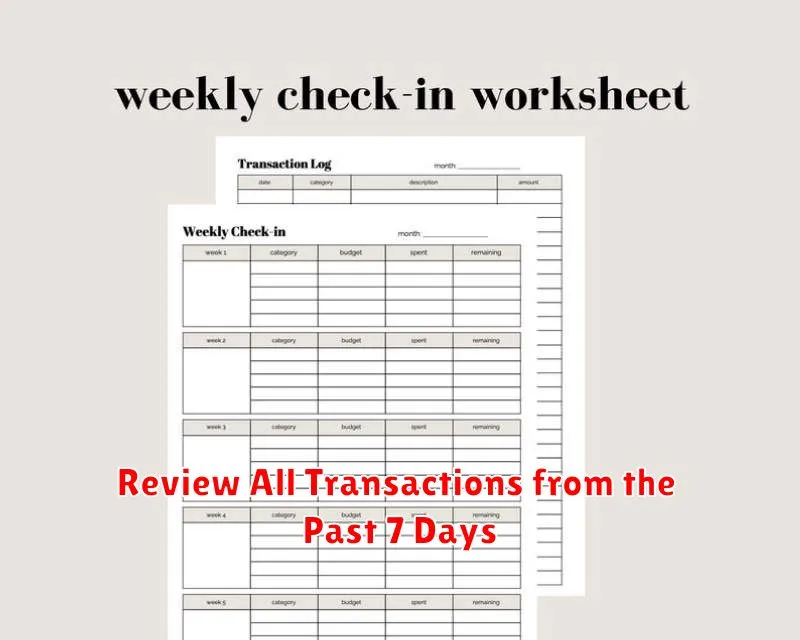
This crucial step provides a real-time snapshot of your spending and income. Reviewing all transactions for the past week allows you to identify any unexpected expenses or areas where you may be overspending.
Utilize your bank’s online platform or mobile app for easy access. Categorize transactions (e.g., groceries, entertainment, bills) to gain a clearer understanding of your spending habits. This detailed review facilitates informed decision-making for the upcoming week.
Note any discrepancies or unusual transactions immediately. Contact your bank or relevant provider to address any potential fraudulent activity or errors. This proactive approach ensures the accuracy of your financial records and prevents future issues.
This weekly review is not about judgment but about gaining awareness. Identify patterns and areas for potential improvement without self-criticism. The goal is to make informed financial decisions going forward.
Compare Budget vs Actual Spending
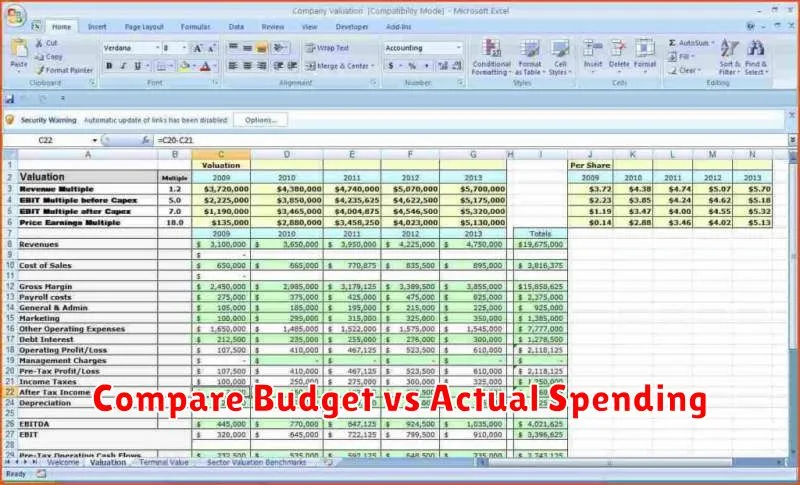
A crucial step in your weekly financial review is comparing your budgeted amounts to your actual spending. This involves meticulously reviewing your transactions for the week against your pre-determined budget categories.
Use a spreadsheet, budgeting app, or even a simple notebook to track this comparison. Identify any significant variances – instances where spending exceeded or fell short of your budget. Analyze the reasons behind these variances. Was it an unexpected expense? A conscious decision to spend more in a particular area? Or perhaps a simple oversight in tracking?
This comparison provides valuable insight into your spending habits. Understanding where your money is actually going allows you to make informed decisions about future budgeting. It helps you identify areas where you might need to adjust your spending or allocate funds more effectively. Regularly comparing budget versus actual spending empowers you to stay on track towards your financial goals.
Adjust Categories Based on Patterns Not Perfection
Your initial budgeting categories might not perfectly capture your spending. That’s okay. The key is to observe patterns over several weeks. Don’t strive for immediate perfection; instead, focus on identifying recurring themes in your spending.
For example, you might notice consistently high spending in the “entertainment” category. This could be a signal to further break down this category into more specific subcategories like “dining out,” “streaming services,” and “concerts.” This level of detail offers more insight into where your money is going.
Conversely, if a category consistently shows very low or no spending, consider merging it with a related category to simplify your review. The goal is to create a system that’s useful and provides actionable information, not a rigid, overly complex structure.
Regularly reviewing and adjusting your categories based on observed patterns allows for a more accurate and effective financial review process over time. Flexibility is key; your system should adapt to your changing spending habits, not the other way around.
Revisit Short-Term Goals Weekly
Regularly reviewing your short-term financial goals is crucial for staying on track. Make it a weekly habit to assess your progress towards these goals. This might involve checking your savings account balance to see if you’re meeting your target for an upcoming purchase, monitoring your debt repayment progress, or reviewing your spending against your budget.
This consistent review allows for timely adjustments. If you’re falling behind, you can identify the reasons and make necessary changes to your spending habits or saving strategies. Conversely, if you’re exceeding expectations, you can consider accelerating your goals or allocating surplus funds elsewhere.
The act of regularly revisiting your goals reinforces your commitment and keeps your financial aspirations top-of-mind. This proactive approach fosters better financial discipline and increases your chances of achieving your short-term objectives successfully.
End with a Small Financial Win Celebration

Concluding your weekly financial review with a small celebration reinforces positive behavior and boosts motivation. This doesn’t need to be extravagant; even a small act of self-care can suffice.
Examples include enjoying a favorite cup of coffee, listening to your favorite music, taking a short walk, or reading a chapter of a good book. The key is to associate your financial progress with a positive feeling, strengthening the habit loop.
By celebrating small wins, you acknowledge your efforts and build momentum. This positive reinforcement makes the process of consistently reviewing your finances less of a chore and more of a rewarding experience, ultimately contributing to improved financial health.
