
Are you tired of living paycheck to paycheck? Do you dream of financial freedom and escaping the constant cycle of debt and stress? This comprehensive guide, “How to Break Free from Paycheck-to-Paycheck Living,” provides actionable strategies to help you gain control of your finances, build a strong financial foundation, and finally achieve lasting financial security. Learn how to budget effectively, eliminate debt, and save money, empowering you to take charge of your financial future and build a life you truly deserve.
Understand Where Your Money Goes Monthly
Breaking free from paycheck-to-paycheck living requires a clear understanding of your monthly spending. This involves meticulously tracking every dollar that leaves your account.
Use budgeting apps, spreadsheets, or even a simple notebook to record all expenses. Categorize your spending into essential needs (housing, food, transportation), wants (entertainment, dining out), and debt payments.
This process reveals where your money is actually going. You might be surprised by the amount spent on seemingly small purchases that add up significantly over time. Identifying these spending patterns is crucial for effective budgeting.
Once you have a comprehensive picture of your spending, you can begin to identify areas where you can reduce expenses and allocate funds towards savings or debt repayment.
Remember that accurately tracking your cash flow is the first and most important step in achieving financial freedom and escaping the paycheck-to-paycheck cycle.
Start Tracking Expenses in Real-Time
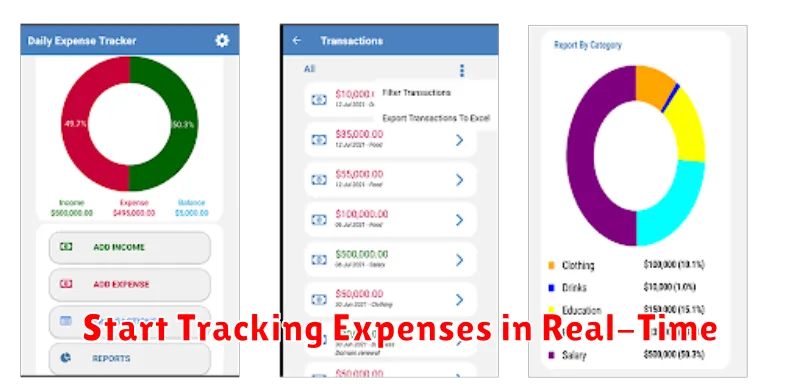
Breaking free from paycheck-to-paycheck living requires understanding where your money goes. Real-time expense tracking is crucial for this. Instead of relying on infrequent budget reviews, utilize budgeting apps or spreadsheets to record every transaction as it happens.
This immediate feedback allows you to identify spending patterns and potential areas for savings instantly. You’ll see exactly how much you’re spending on daily necessities, entertainment, and unnecessary purchases, enabling informed decisions about your finances.
Many financial apps automatically categorize transactions, simplifying the process. Alternatively, a simple spreadsheet can be equally effective. The key is consistency; the more diligently you track, the clearer the picture of your spending habits will become.
By adopting real-time expense tracking, you gain valuable insights into your financial health and empower yourself to make necessary adjustments for a more secure financial future.
Prioritize Needs Over Wants Consistently
Breaking free from paycheck-to-paycheck living requires a fundamental shift in spending habits. This starts with consistently prioritizing needs over wants. Needs are essential for survival and well-being, such as housing, food, transportation, and healthcare. Wants, on the other hand, are non-essential items or experiences that provide pleasure but aren’t necessary for survival.
To effectively prioritize, create a detailed budget. Categorize your expenses into needs and wants. Identify areas where you can reduce spending on wants without significantly impacting your quality of life. This might involve cutting back on eating out, entertainment, or impulse purchases. Consider using budgeting apps or spreadsheets to track your spending and stay accountable.
Delayed gratification is key. Instead of immediately purchasing a desired item, wait a predetermined period (e.g., a week or a month) to assess whether the want remains a priority. Often, the desire fades with time. If the desire persists, consider saving for it to avoid accumulating debt.
Remember, consistently prioritizing needs allows you to allocate more funds towards saving and debt reduction, ultimately breaking the cycle of paycheck-to-paycheck living and building financial security. This disciplined approach forms the cornerstone of long-term financial stability.
Set Up Automatic Transfers to Savings

One of the most effective strategies to escape paycheck-to-paycheck living is to automate your savings. This removes the temptation to spend money you’ve earmarked for savings and ensures consistent contributions.
Set up a recurring transfer from your checking account to your savings account. Many banks allow you to schedule this easily through online banking. Choose an amount that is manageable but still makes a significant impact—even a small, regular amount adds up over time.
Consider setting up multiple transfers. For example, you could set one transfer for a specific amount on payday and another smaller transfer midway through the month.
Timing is key. Ideally, the transfer should occur immediately after payday, before you have a chance to spend the money. This ensures consistent savings contributions regardless of your spending habits.
Review and adjust regularly. As your income increases or your financial goals change, reassess your automatic transfers to optimize your savings plan. Monitor your accounts to ensure the transfers are consistently processing correctly.
Cut Down on Subscriptions and Recurring Charges
One significant step towards escaping paycheck-to-paycheck living is to meticulously review and reduce your recurring subscriptions and charges. Many people unknowingly pay for services they rarely or never use.
Start by creating a comprehensive list of all your monthly subscriptions – streaming services, gym memberships, software subscriptions, etc. Then, honestly assess your usage of each service. If a service isn’t providing sufficient value or isn’t being used regularly, cancel it. Prioritize essential services and eliminate those that are non-essential or redundant.
Consider bundling services where possible. Some companies offer discounts for combining internet, phone, and television services. Negotiate lower rates with providers; they may be willing to offer a discount to retain your business. Be proactive in managing your subscriptions to avoid unexpected charges and gain control over your monthly expenses.
Regularly review your subscriptions – at least quarterly – to ensure you’re still getting value for your money and to catch any unwanted charges. This proactive approach can lead to significant savings over time, freeing up funds to address other financial goals.
Increase Income Through Flexible Side Work
Breaking free from paycheck-to-paycheck living often requires supplementing your primary income. Flexible side work offers a powerful solution, allowing you to earn extra money while maintaining control over your schedule and commitments. The key is identifying opportunities that align with your skills and availability.
Numerous options exist. Online freelancing platforms connect you with clients needing various services, from writing and editing to graphic design and web development. Gig economy apps provide opportunities for tasks like delivery driving, pet sitting, or grocery shopping. Tutoring or teaching online leverages your expertise in specific subjects. Selling handmade crafts or goods online can generate passive income streams.
Careful planning is crucial. Assess your skills and interests to choose a suitable side hustle. Set realistic goals for your earnings and allocate dedicated time slots for work. Maintain accurate records of income and expenses to track your progress and maximize tax benefits. Remember that consistency is key to achieving significant financial gains. Starting small and gradually expanding your side work efforts allows for manageable growth and prevents burnout.
Build a 1-Month Expense Buffer Slowly
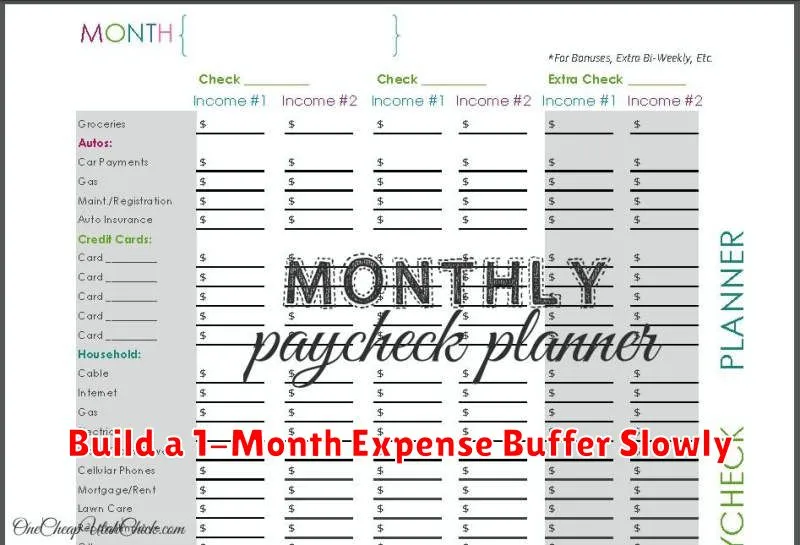
Escaping paycheck-to-paycheck living requires building a financial safety net. Start by creating a one-month expense buffer. This isn’t about saving for a vacation; it’s about covering essential costs if your income is interrupted.
Don’t try to achieve this overnight. Start small. Identify a realistic amount you can save each month, even if it’s just $50 or $100. Consistency is key. Automate your savings by setting up a recurring transfer from your checking to a savings account specifically designated for this buffer.
Track your expenses diligently. Use budgeting apps or spreadsheets to monitor your spending habits and identify areas where you can reduce costs. Small changes, such as packing lunch or reducing entertainment expenses, can significantly contribute to your savings goal.
As your buffer grows, you’ll gain financial confidence and reduce stress. The goal is to build a cushion that can cover unexpected events, like car repairs or medical bills, without derailing your finances. Once you’ve reached your one-month goal, consider increasing your savings to build a larger emergency fund.
